How it works
How Does Burn Gummy Work? The Role of Each Ingredient
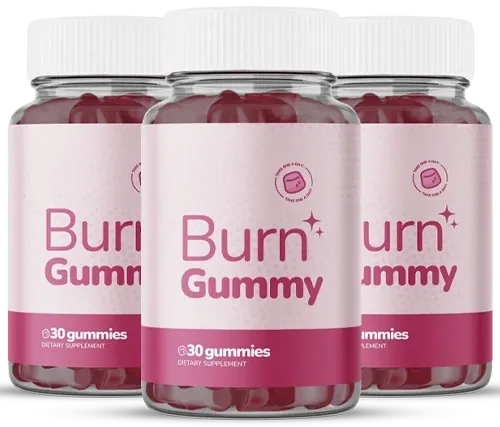
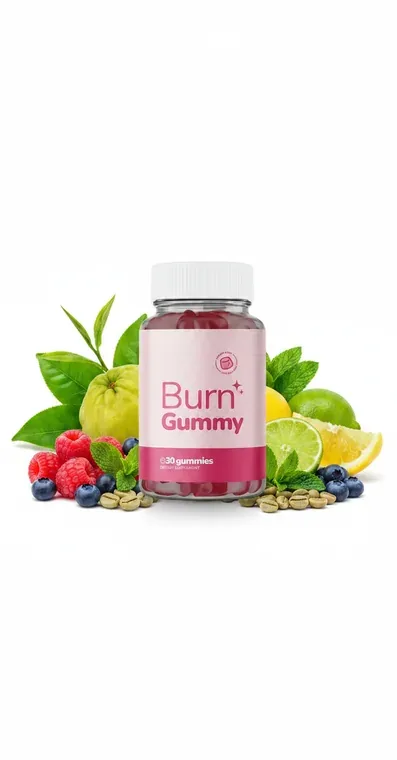
Burn Gummy works through three well-known supplement ingredients taken as one gummy a day.
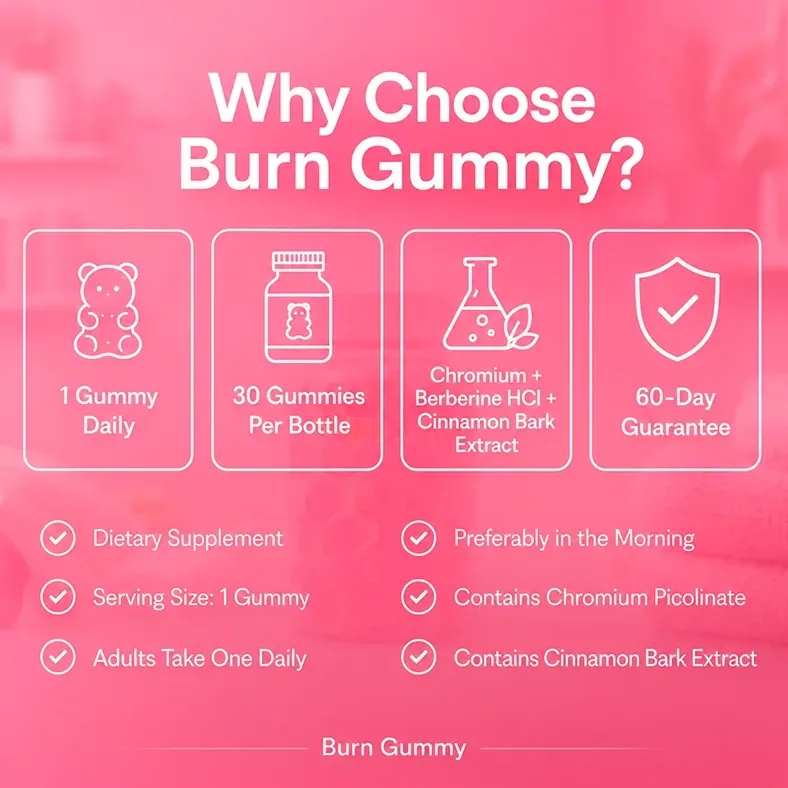
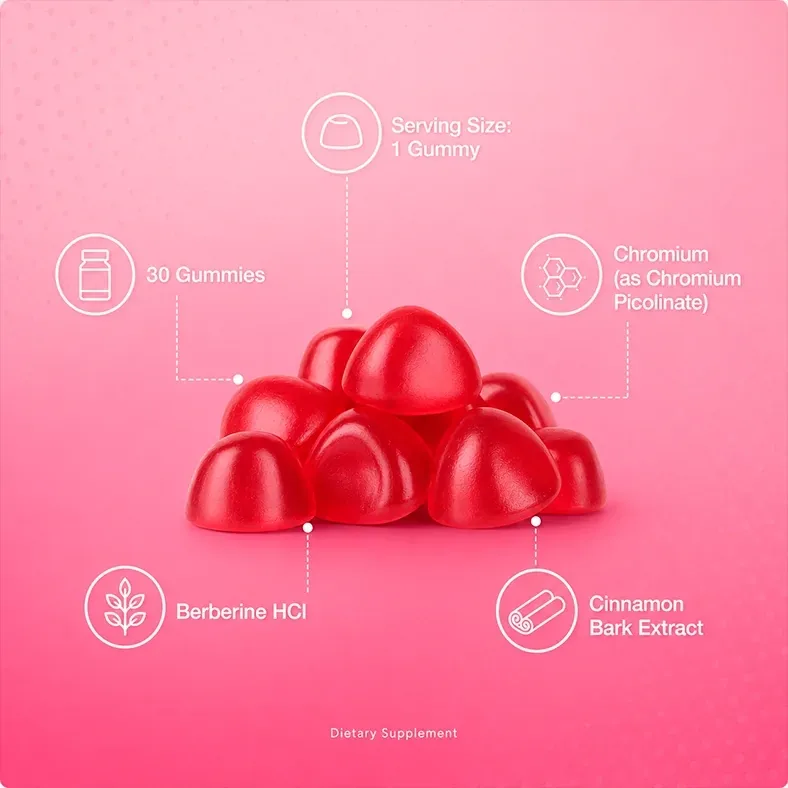
Each gummy gives chromium 25 mcg, berberine HCl 40 mg and cinnamon bark extract 28 mg. Each has research behind it, mostly at larger doses, so expect a modest daily role.
See what is on the label in the full ingredient list.
Written by the Burn Gummy label deskUpdated
Plain answer01
What does Burn Gummy do in the body?
Nobody has measured what this gummy does in a person. No trial of it has been published that we could find, and the sales page names no study of its own. (Burn Gummy sales page) What we can do is describe what the three named ingredients are known and suspected to do, then be honest about the distance between those findings and a 25 mcg, 40 mg and 28 mg gummy.
The sales page frames the product around five supports: “Fat-Burning Support”, “Appetite Control”, “Metabolic Boost”, “Blood Sugar Balance” and “All-Day Energy”. The label graphic prints none of them. It prints amounts, a serving size and a direction to take one gummy daily.
Think of the gummy as a small daily dose of three well-known supplement ingredients in a sweet, chewable shape. Whether that is worth the price is a personal call; whether it is a fat burner in the sense of a drug is a question the evidence does not support.
Claim by claim02
How do the five promised supports compare with the evidence?
Taking the sales page's five headline supports one at a time shows the pattern: each rests on a research area for one ingredient, not on a test of the gummy.
| Support promised | Ingredient behind it | Research in one line |
|---|---|---|
| “Fat-Burning Support” | Berberine | Two meta-analyses found small average weight drops, about 0.9 kg and 2 kg, in trials of uneven quality. (Elahi Vahed et al., Int J Obes 2026) (Asbaghi et al., Clin Nutr ESPEN 2020) |
| “Appetite Control” | Chromium, cinnamon | We found no trial in which either one dampened appetite or sweet cravings. |
| “Metabolic Boost” | Berberine, chromium | Findings concern weight measures and glucose markers, not metabolic rate. |
| “Blood Sugar Balance” | All three | NCCIH calls the evidence weak; the ADA says no supplement is proven. (NCCIH, Diabetes and Dietary Supplements) (ADA, Vitamins & Supplements) |
| “All-Day Energy” | None listed | No stimulant or energy ingredient appears on the label. |
The two meta-analyses mean something real: across many small trials, people taking berberine lost a little more weight than people taking placebo. The authors still call for better reporting of dose, purity and blinding.
Ingredient one03
How might chromium picolinate work?
Chromium is a trace mineral that the body uses alongside insulin. For adults the Adequate Intake is 20 to 35 mcg a day depending on sex and age, so one gummy at 25 mcg supplies roughly a day's worth for many women and most of one for men. (NIH ODS, Chromium)
Studies of chromium for glucose or weight mostly used 200 to 1,000 mcg a day. A Cochrane review of nine trials with 622 adults found about 1.1 kg more weight loss than placebo, and the authors called the effect of debatable clinical relevance. (NIH ODS, Weight-loss supplements) In healthy people chromium does not appear to change glucose at all.
So the fair summary: a gummy gives a nutritional amount of chromium, not the amounts used in the trials. See the chromium page for the full dose comparison.
Ingredient two04
How might berberine work, and is 40 mg enough?
Berberine is an alkaloid from plants such as barberry. It is the ingredient with the most weight-related research, and the trials behind the meta-analyses mostly used herbal products at hundreds of milligrams, taken two or three times a day. The usual product dose cited by the NIH LiverTox database is 250 to 500 mg two or three times daily. (NIH LiverTox, Berberine)
A gummy holds 40 mg, under one tenth of one such dose. That does not prove nothing happens, but it removes the straightforward argument that the trial results apply. Berberine also carries cautions that chromium and cinnamon do not: it should be avoided in pregnancy and breastfeeding and it interacts with several medicines. (MSKCC, Berberine)
Ingredient three05
What does cinnamon bark extract add?
Cinnamon is the spice most often paired with blood-sugar claims. Memorial Sloan Kettering says results for diabetes-related markers are mixed and that larger, better trials are needed. (MSKCC, Cinnamon) The label names the form (bark extract) and the amount (28 mg) but not the species, and we found no verified studied dose to compare it with.
There is a safety angle worth knowing: some cinnamon contains coumarin, which can harm the liver in large amounts, and cinnamon taken with statins has been reported to cause hepatitis. At 28 mg a day the risk is small, but it is a reason to tell your pharmacist about the gummy if you use a statin.
Energy balance06
Can a gummy replace eating less and moving more?
No label line suggests it can, and the research does not support the idea. The NIH Office of Dietary Supplements says little is known about whether weight-loss supplements work and that lifestyle changes remain the foundation. (NIH ODS, Weight-loss supplements) The CDC points people toward a gradual pace of about 1 to 2 pounds a week. (CDC, Losing weight)
- Any effect from three ingredients at these amounts is likely to be small next to food, sleep and activity.
- A supplement that replaced prescribed medicine would be dangerous, and nothing here suggests that.
- Weight loss with no diet or exercise change is a warning sign in NIDDK's checklist. (NIDDK, Choosing a safe weight-loss program)
What to do07
What is a sensible way to use this information?
If you are still interested after reading the evidence, treat Burn Gummy as an optional extra, not a plan. Read the back label on the jar that arrives, take one gummy a day as the label directs, and keep a short log of weight and how you feel at day 30 and day 60. The sales page's refund window is 60 days.
Before you start, run through the who it is for page if you take medicine, are pregnant, or share a home with a dog.
Sources08
Where do these facts come from?
- Dietary Supplements for Weight Loss: Fact Sheet for Health Professionals. NIH Office of Dietary Supplements, 2026.A Cochrane review (2013) of 9 trials with 622 adults found chromium picolinate at 200-1,000 mcg/day for 8 weeks to 6 months cut body weight by 1.1 kg more than placebo; the authors called the effect of debatable clinical relevance and rated the evidence low quality. A second analysis (11 trials) found 0.5 kg. The sheet says little is known about whether weight-loss supplements work, that lifestyle change is the basis of long-term weight loss, that supplements need no FDA premarket approval, and that FDA does not permit pharmaceutical ingredients in them.
- The effect of berberine on obesity indices: a systematic review and meta-analysis. Elahi Vahed I and colleagues, International Journal of Obesity, 2026.23 included articles of randomized trials in adults. Pooled mean differences: body weight -0.88 kg (95% CI -1.36 to -0.39), BMI -0.48 kg/m2, waist circumference significantly lower, waist-to-hip ratio not significant. The authors call for better reporting of berberine purity, potency and dose and for trials with proper blinding and randomization. (Read through Europe PMC; the full text is behind a subscription.)
- Berberine - LiverTox: Clinical and Research Information on Drug-Induced Liver Injury. NIDDK, NCBI Bookshelf, 2020.Last updated October 29, 2026. 'The usual recommended dose of the herbal product is 250 to 500 mg two or three times daily' (about 500-1,500 mg a day). Side effects are few and mostly mild stomach symptoms (nausea, bloating, diarrhea, constipation); serious adverse events have been rare; berberine has not been linked to clinically apparent liver injury (likelihood score E). The page does not discuss drug interactions.
FAQ09
Questions about how Burn Gummy works
Does Burn Gummy burn fat?
Nothing on the label says so, and no trial of the gummy exists. Berberine has small average weight effects in meta-analyses of capsules, at doses far above 40 mg. Treat the sales page's fat claims as marketing.
Is Burn Gummy a thermogenic?
The sales page uses that word, but the label lists no stimulant such as caffeine or green tea extract. Our thermogenic guide explains what the term usually means.
Can Burn Gummy curb cravings?
We found no trial in which chromium, berberine or cinnamon dampened cravings. The sales page says customers notice shifts in 7 to 14 days, with no source or sample size given.
Does it work without exercise?
Even the strongest research on these ingredients was done alongside ordinary diets. Do not count on a gummy to do the work of activity and food changes.
How is a gummy different from a berberine capsule?
Mainly in amount and sweeteners. Capsules commonly carry 500 mg of berberine; a gummy carries 40 mg plus maltitol, xylitol and other sweeteners.
Does Burn Gummy contain caffeine?
The Supplement Facts graphic lists no caffeine and no stimulant. The 'steady all-day energy' claim on the sales page has no ingredient behind it on the label.
Who wrote this10
Written and reviewed by
Pages built from the label graphic, the sales page and linked NIH, FDA, CDC, FTC and peer-reviewed sources.
Last updated . Read our editorial standards and how we check reviews. This website is run by Myburngummy, a U.S. stocking partner for Burn Gummy, not by the manufacturer. We make money when you buy through our order links.
Keep reading
More about Burn Gummy
U.S. stocking partner for Burn Gummy
Ready to try Burn Gummy?
Check your medicines first, then pick a pack. Six jars cost the least per jar, and every pack carries the 60-day money-back guarantee on the sales page.
- Checkout on the sales page
- 60-day money-back guarantee
- Shipping shown at checkout