Ingredient: chromium
Chromium picolinate in Burn Gummy: what 25 mcg means
Each Burn Gummy lists chromium (as chromium picolinate) 25 mcg, which is 71% of the Daily Value and close to the Adequate Intake for women. Trials of chromium for blood sugar or weight used roughly 200 to 1,000 mcg a day, so a gummy supplies a nutritional amount, not a studied one.
Written by the Burn Gummy label deskUpdated
What it is01
What is chromium picolinate?
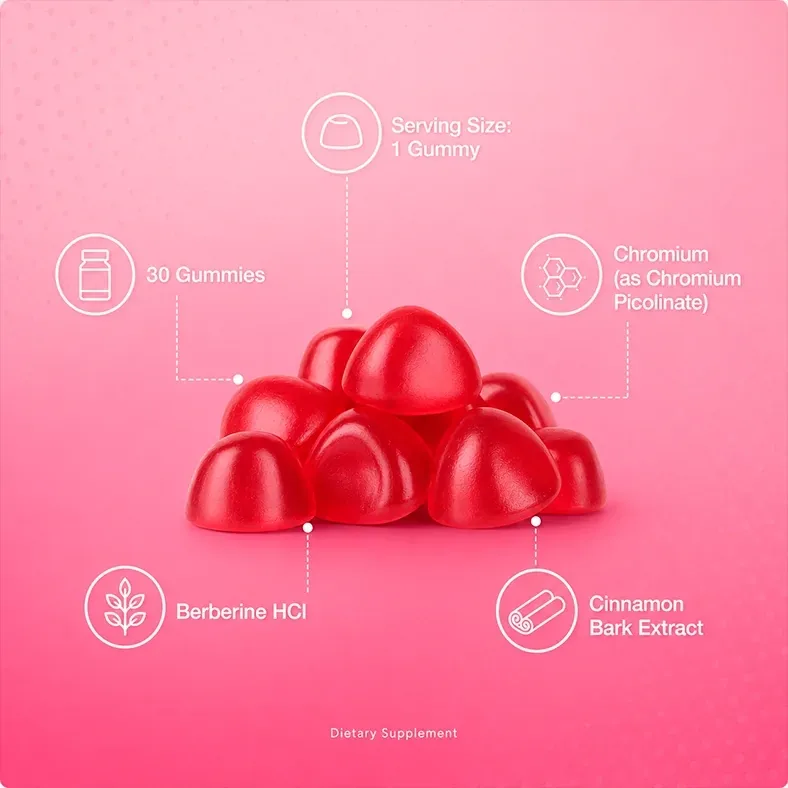
Chromium is a trace mineral the body needs in tiny amounts. Picolinate is the form where chromium is bound to picolinic acid, the version most often sold in supplements and used in research. On the Burn Gummy label it reads “Chromium (as chromium picolinate)” with an amount of 25 mcg and a Daily Value of 71%.
| Name on the label | Chromium (as chromium picolinate) |
|---|---|
| What it is | Trace mineral, picolinate form |
| Amount per gummy | 25 mcg (71% DV) |
| Amount used in research | 200-1,000 mcg a day in glucose and weight trials |
| Strength of evidence | Small weight effect in some reviews; mixed for glucose |
| Marketed or traditional use | Studied for glucose and weight |
| Main caution | May add to the effect of diabetes medicines; may reduce levothyroxine absorption. |
The Daily Value for chromium is 35 mcg, which is where 71% comes from. For adults the Adequate Intake runs from 20 to 35 mcg a day depending on age and sex, 25 mcg being the figure for women aged 19 to 50. (NIH ODS, Chromium)
The research02
Does chromium help with weight or blood sugar?
The research is more cautious than the marketing. The NIH Office of Dietary Supplements says most glucose trials used about 200 to 1,000 mcg a day, mainly as chromium picolinate, with mixed results, and that chromium does not appear to change glucose in healthy people. (NIH ODS, Chromium)
For weight, a Cochrane review of nine trials with 622 adults found chromium picolinate at 200 to 1,000 mcg a day for between eight weeks and six months cut body weight by about 1.1 kg more than placebo. The authors rated the evidence low quality and called the clinical relevance debatable. A second analysis of eleven trials found about 0.5 kg. (NIH ODS, Weight-loss supplements)
One kilogram is about 2.2 pounds. A difference of 0.5 to 1.1 kg between groups over months is small, and it came from amounts eight to forty times higher than one gummy.
Dose check03
How does 25 mcg compare with the amounts studied?
One gummy holds roughly one eighth of the lowest amount tested in the weight trials. Even if you ate the whole jar's worth in a day you would not enter the studied range, and nobody should try. The bars below put the two numbers on one scale.
A smaller amount can still help correct a real shortfall, but most people in the US are not thought to lack chromium. For them the label amount is closer to a nutritional top-up than to the studied exposure.
The sales page04
What does the sales page say about chromium?
The sales page says chromium “supports insulin sensitivity, blood-sugar balance and reduces sweet cravings”. (Burn Gummy sales page) Insulin sensitivity and glucose are the best-studied parts, and even there NCCIH calls the evidence weak. (NCCIH, Diabetes and Dietary Supplements) We found no trial showing a craving effect from chromium.
Evidence rules for advertising matter here. The FTC expects health claims to rest on competent and reliable scientific evidence, generally human trials of the same product, dose and population. (FTC, Health Products Compliance)

Cautions05
Who should be careful with chromium?
Chromium may add to the effect of insulin and other diabetes medicines, which raises the risk of low blood sugar. It may also reduce the absorption of levothyroxine, a thyroid medicine, so doses are usually spaced apart. (NIH ODS, Chromium)
- On insulin, a sulfonylurea or any diabetes drug: ask your doctor or pharmacist before adding the gummy.
- On thyroid medicine: ask about timing.
- Kidney or liver disease: ask first, because high doses have been linked with problems in case reports, far above the label amount.
The supplements and medicines guide has a conversation script for the pharmacy counter.
The picture06
Why is there a green vegetable on the chromium card?
The brand's image set pairs chromium with a photograph of a green Romanesco. That is a stock illustration, not an ingredient: the label lists chromium picolinate, a mineral compound, and no vegetable. We use it because the vendor supplied it, and we say what it is.
Sources07
Where do the chromium facts come from?
- Chromium: Fact Sheet for Health Professionals. NIH Office of Dietary Supplements, 2022.Adequate Intake for adults is 20-35 mcg/day depending on sex and age (men 19-50: 35 mcg; women 19-50: 25 mcg); the Daily Value is 35 mcg. Most glucose trials used about 200-1,000 mcg/day, mainly as chromium picolinate, with mixed results; chromium does not appear to change glucose in healthy people. Chromium may add to the effect of insulin and other diabetes drugs (raising low-blood-sugar risk) and may reduce levothyroxine absorption.
- Dietary Supplements for Weight Loss: Fact Sheet for Health Professionals. NIH Office of Dietary Supplements, 2026.A Cochrane review (2013) of 9 trials with 622 adults found chromium picolinate at 200-1,000 mcg/day for 8 weeks to 6 months cut body weight by 1.1 kg more than placebo; the authors called the effect of debatable clinical relevance and rated the evidence low quality. A second analysis (11 trials) found 0.5 kg. The sheet says little is known about whether weight-loss supplements work, that lifestyle change is the basis of long-term weight loss, that supplements need no FDA premarket approval, and that FDA does not permit pharmaceutical ingredients in them.
- Diabetes and Dietary Supplements: What You Need To Know. National Center for Complementary and Integrative Health (NIH), 2023.For most supplements there is no evidence of a beneficial effect on diabetes or its complications; only weak evidence exists for a few (chromium, cinnamon, berberine, alpha-lipoic acid). It is very important not to replace medical treatment for diabetes with an unproven health product.
FAQ08
Chromium picolinate questions
How much chromium is in a Burn Gummy?
Each gummy lists 25 mcg of chromium as chromium picolinate, which the label puts at 71% of the Daily Value.
Is 25 mcg of chromium enough to lower blood sugar?
We cannot say it lowers blood sugar at all. Studies that examined glucose used 200 to 1,000 mcg a day, and effects in healthy people were not seen.
What is the difference between chromium picolinate and other forms?
Picolinate binds chromium to an organic acid. It is the form most used in trials, which is why labels and researchers favor it, but no form has been proven to work for weight.
Can chromium cause side effects?
At nutritional amounts, rarely. Reports at high doses include stomach upset and, in a few case reports, kidney or liver problems. Medicine interactions matter more than the dose here.
Does chromium interact with thyroid medicine?
It may lower levothyroxine absorption, so ask your pharmacist about spacing the two.
Is the Romanesco photo what chromium looks like?
No. It is a stock image from the brand set. Chromium picolinate is a purified mineral compound.
Who wrote this09
Written and reviewed by
Pages built from the label graphic, the sales page and linked NIH, FDA, CDC, FTC and peer-reviewed sources.
Last updated . Read our editorial standards and how we check reviews. This website is run by Myburngummy, a U.S. stocking partner for Burn Gummy, not by the manufacturer. We make money when you buy through our order links.
Keep reading
More about Burn Gummy


U.S. stocking partner for Burn Gummy
Ready to try Burn Gummy?
Check your medicines first, then pick a pack. Six jars cost the least per jar, and every pack carries the 60-day money-back guarantee on the sales page.
- Checkout on the sales page
- 60-day money-back guarantee
- Shipping shown at checkout