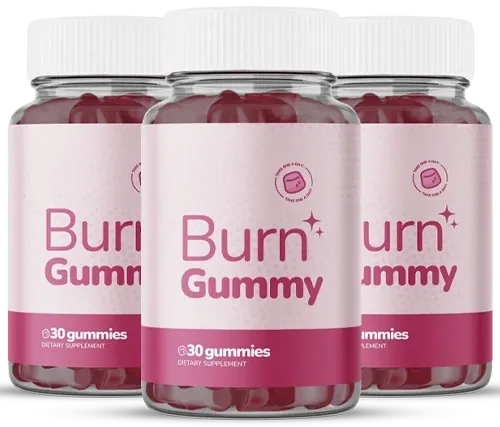
Ingredients
Burn Gummy Ingredients: All 14 Label Lines in One List
Each Burn Gummy lists three named ingredients and 11 other ingredients, 14 label lines in all.
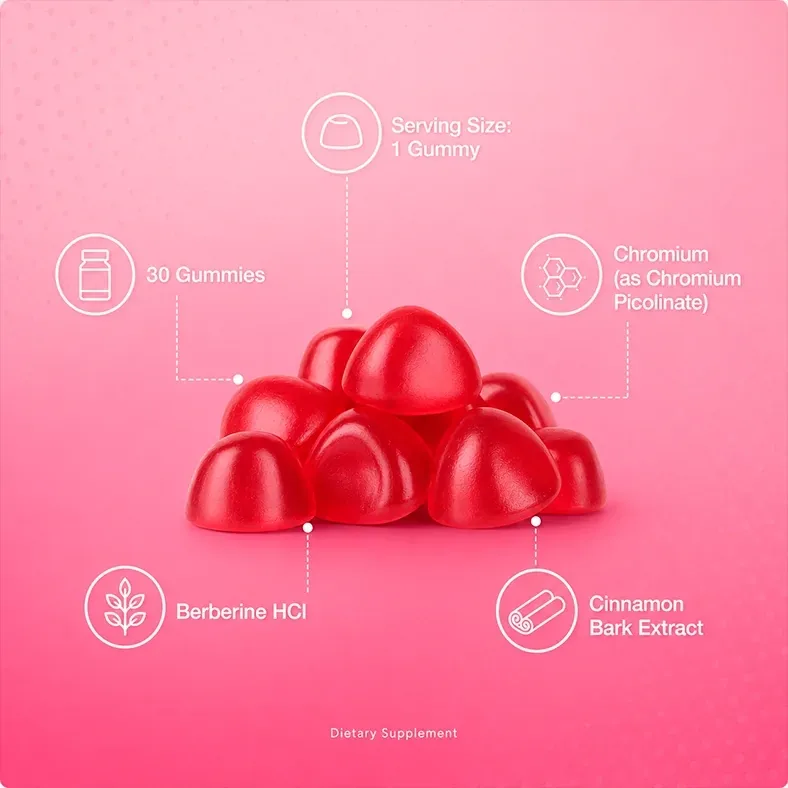
The named ones are chromium picolinate 25 mcg (71% DV), berberine HCl 40 mg and cinnamon bark extract 28 mg. The base includes maltitol, xylitol, pectin, stevia leaf extract and FD&C Red 40.
For the full panel, see the supplement facts page.
Written by the Burn Gummy label deskUpdated
The full list01
What are the ingredients in Burn Gummy?
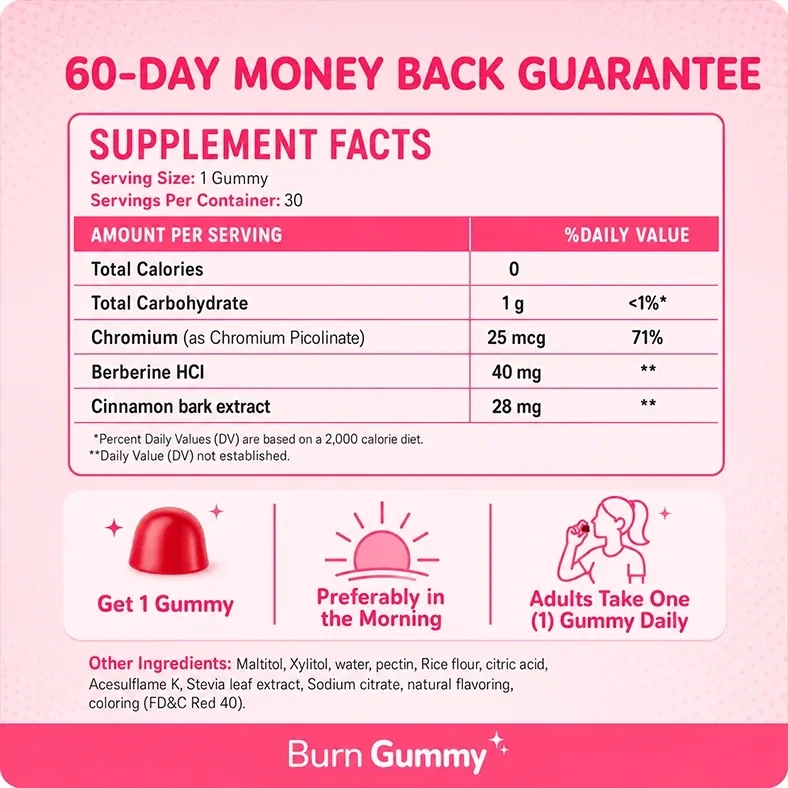
The Supplement Facts graphic shows 14 ingredient lines in two groups. Three are named in the facts panel with an amount per gummy. Eleven sit in the “other ingredients” line without amounts, as the rules for supplement labels allow. (21 CFR 101.36 (eCFR))
- 1Chromium (as chromium picolinate)25 mcg (71% DV)
- 2Berberine HCl40 mg (no DV)
- 3Cinnamon bark extract28 mg (no DV)
- 4MaltitolSweeteners
- 5XylitolSweeteners
- 6Acesulfame KSweeteners
- 7Stevia leaf extractSweeteners
- 8WaterGummy base
- 9PectinGummy base
- 10Rice flourGummy base
- 11Citric acidGummy base
- 12Sodium citrateGummy base
- 13Natural flavoringFlavor and color
- 14Coloring (FD&C Red 40)Flavor and color
From the Supplement Facts graphic. Lines 1-3 are the printed amounts; lines 4-14 are the "other ingredients", listed in label order with no amounts.
Each name above links to the page that covers it. The three named ingredients each have their own page; the eleven others share one, because they do the same jobs in most gummies: sweetening, setting, flavoring and coloring.
Named ingredients02
What are the three active ingredients?
Chromium is a trace mineral, berberine is a plant alkaloid and cinnamon bark extract comes from a spice. They are the only lines with an amount, so they are what the sales page leans on.
-
 25 mcg (71% DV)01
Chromium picolinate
25 mcg, the only line with a Daily Value
Trace mineral, picolinate form
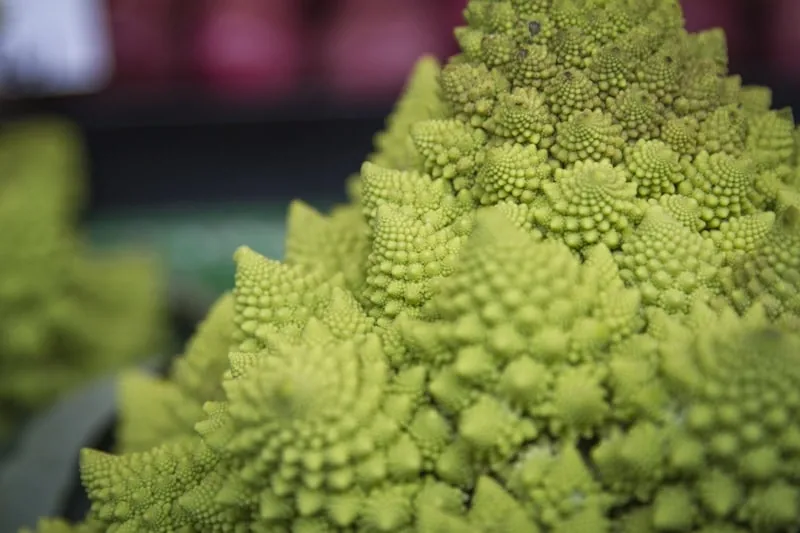
Evidence: Small weight effect in some reviews; mixed for glucoseStock photo of a green vegetable from the brand's set; the label lists chromium picolinate, a mineral compound, not a vegetable extract.
Per gummy25 mcg (71% DV)
Studied at200-1,000 mcg a day in glucose and weight trials
Watch forMay add to the effect of diabetes medicines; may reduce levothyroxine absorption.
Full profile -
 40 mg (no DV)02
Berberine HCl
40 mg per gummy
Plant alkaloid (barberry, goldenseal), hydrochloride salt
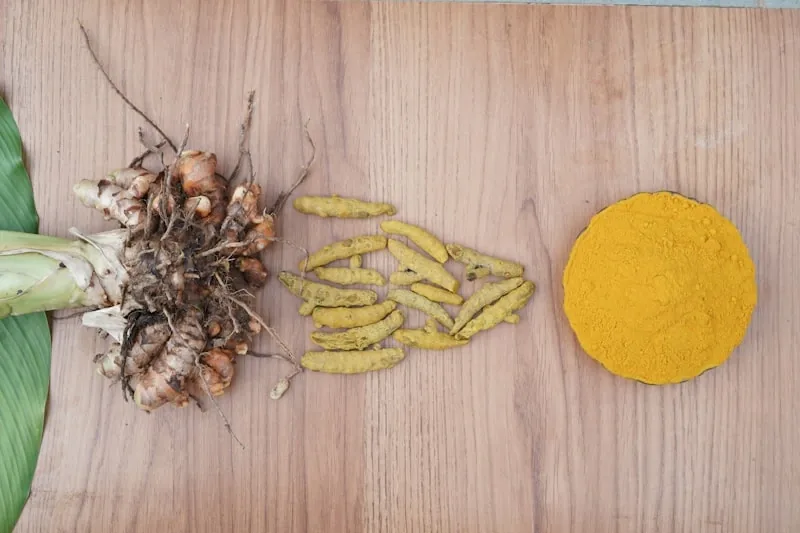
Evidence: Small average weight drops in two meta-analyses; trial quality variesBrand photo of roots, pods and a yellow powder; the label lists berberine HCl, a purified salt of the plant compound.
Per gummy40 mg (no DV)
Studied atUsual product dose 250-500 mg two or three times a day
Watch forAvoid in pregnancy and breastfeeding; interacts with several drugs; stomach upset.
Full profile -
 28 mg (no DV)03
Cinnamon bark extract
28 mg per gummy
Cinnamon bark; the species is not printed
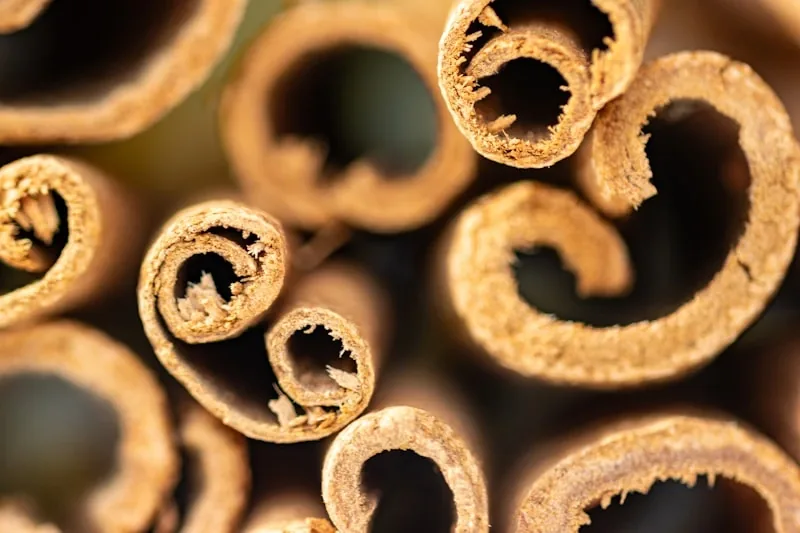
Evidence: Mixed for glucose markersBrand photo of cinnamon bark; the label says 'cinnamon bark extract' and does not name the species.
Per gummy28 mg (no DV)
Studied atNo verified studied dose found
Watch forSome cinnamon contains coumarin, which can harm the liver; reported hepatitis with statins.
Full profile -
 11 label lines04
Sweeteners and other ingredients
11 'other ingredients'
Maltitol, Xylitol, Acesulfame K, Stevia leaf extract, Water, Pectin, Rice flour, Citric acid, Sodium citrate, Natural flavoring, FD&C Red 40
Evidence: Not dosed ingredients: safety notesThe brand's gummy graphic. The 'other ingredients' are printed on the Supplement Facts graphic.
Per gummyNo amounts printed
Studied atNot a dosed group
Watch forXylitol and dogs; sugar alcohols and the stomach; the dye
Full profile
Hover a card on a computer, or tap through on a phone, to read the short version. The full pages carry citations.
Amounts03
How much of each ingredient is in one gummy?
One gummy lists chromium (as chromium picolinate) 25 mcg, which is 71% of the Daily Value; berberine HCl 40 mg and cinnamon bark extract 28 mg, neither of which has a Daily Value. The sales page says there are “no proprietary blends”, and the label matches that: each amount is printed separately.
| Label line | Group | Per gummy | Amount used in research | Evidence |
|---|---|---|---|---|
| Chromium (as chromium picolinate) | Named ingredients | 25 mcg (71% DV) | 200-1,000 mcg a day in glucose and weight trials (NIH ODS, Chromium) (NIH ODS, Weight-loss supplements) | Small weight effect in some reviews; mixed for glucose |
| Berberine HCl | Named ingredients | 40 mg (no DV) | Usual product dose 250-500 mg two or three times a day (MSKCC, Berberine) (Elahi Vahed et al., Int J Obes 2026) (Asbaghi et al., Clin Nutr ESPEN 2020) (NIH LiverTox, Berberine) | Small average weight drops in two meta-analyses; trial quality varies |
| Cinnamon bark extract | Named ingredients | 28 mg (no DV) | No verified studied dose found (MSKCC, Cinnamon) (NCCIH, Diabetes and Dietary Supplements) | Mixed for glucose markers |
| Maltitol | Sweeteners | Not printed | Not a dosed ingredient (Makinen, Int J Dent 2016) | Digestive effects at higher intakes |
| Xylitol | Sweeteners | Not printed | Not a dosed ingredient (FDA, Xylitol and dogs) (Makinen, Int J Dent 2016) | Dangerous to dogs |
| Acesulfame K | Sweeteners | Not printed | Not a dosed ingredient (FDA, Sweeteners in food) | Permitted sweetener |
| Stevia leaf extract | Sweeteners | Not printed | Not a dosed ingredient (FDA, Sweeteners in food) | Permitted when high-purity |
| Water | Gummy base | Not printed | Not a dosed ingredient | Not applicable |
| Pectin | Gummy base | Not printed | Not a dosed ingredient | Not applicable |
| Rice flour | Gummy base | Not printed | Not a dosed ingredient | Not applicable |
| Citric acid | Gummy base | Not printed | Not a dosed ingredient | Not applicable |
| Sodium citrate | Gummy base | Not printed | Not a dosed ingredient | Not applicable |
| Natural flavoring | Flavor and color | Not printed | Not a dosed ingredient | Not applicable |
| Coloring (FD&C Red 40) | Flavor and color | Not printed | Not a dosed ingredient (eCFR, 21 CFR 74.340 (Red 40)) | Legally listed for foods and supplements |
The studied ranges are typical amounts used in research, not safe or recommended intakes for this product.
Reality check04
Are the amounts close to what research used?
Not close, and this is where careful readers should pause. Chromium trials mostly used 200 to 1,000 mcg a day; one gummy holds 25 mcg. The usual berberine product dose is 250 to 500 mg two or three times a day; one gummy holds 40 mg. For cinnamon we found no verified studied dose at all. (NIH ODS, Chromium) (NIH LiverTox, Berberine) The table above sets both side by side.
The other 1105
What are the 11 other ingredients for?
The other ingredients make the product a gummy. Four are sweeteners: maltitol and xylitol (sugar alcohols), acesulfame K (a synthetic high-intensity sweetener) and stevia leaf extract. Water, pectin, rice flour, citric acid and sodium citrate are the base. Natural flavoring gives taste and FD&C Red 40 gives the raspberry-red color.
- Pectin is a fruit-derived gelling fiber, so these are not made with gelatin.
- Xylitol is dangerous to dogs, so the jar must stay out of reach. (FDA, Xylitol and dogs)
- Maltitol and xylitol can loosen stools at higher intakes; one gummy is small. (Makinen, Int J Dent 2016)
- Acesulfame K and Red 40 are synthetic, so the product is not free of artificial sweeteners or dyes. (FDA, Sweeteners in food) (eCFR, 21 CFR 74.340 (Red 40))
The sweeteners and other ingredients page gives each line its own paragraph.
Wording06
Is Burn Gummy really 'natural' and 'clean'?
The brand's graphics carry a “100% natural ingredients” badge, and the sales page promises that the gummy is cleanly burned. The label does not fit that wording: it lists acesulfame K and a certified synthetic dye. Natural does not equal safe, and synthetic does not equal harmful; the point is that the badge and the label disagree.
Sources07
Which sources back this ingredient review?
- Chromium: Fact Sheet for Health Professionals. NIH Office of Dietary Supplements, 2022.Adequate Intake for adults is 20-35 mcg/day depending on sex and age (men 19-50: 35 mcg; women 19-50: 25 mcg); the Daily Value is 35 mcg. Most glucose trials used about 200-1,000 mcg/day, mainly as chromium picolinate, with mixed results; chromium does not appear to change glucose in healthy people. Chromium may add to the effect of insulin and other diabetes drugs (raising low-blood-sugar risk) and may reduce levothyroxine absorption.
- Gastrointestinal Disturbances Associated with the Consumption of Sugar Alcohols with Special Consideration of Xylitol. Kauko K. Makinen, International Journal of Dentistry, 2016.Sugar alcohols may cause gastrointestinal disturbances, at least in people not used to them. In the cited studies 35 g of maltitol a day did not affect well-being or stools, 40 g caused mild gas, and 45 g caused transient diarrhea in 29 of 34 subjects; FDA lists maltitol as GRAS with a laxative warning above 100 g a day for adults. Xylitol is better tolerated than sorbitol or mannitol.
- Berberine - LiverTox: Clinical and Research Information on Drug-Induced Liver Injury. NIDDK, NCBI Bookshelf, 2020.Last updated October 29, 2026. 'The usual recommended dose of the herbal product is 250 to 500 mg two or three times daily' (about 500-1,500 mg a day). Side effects are few and mostly mild stomach symptoms (nausea, bloating, diarrhea, constipation); serious adverse events have been rare; berberine has not been linked to clinically apparent liver injury (likelihood score E). The page does not discuss drug interactions.
FAQ08
Burn Gummy ingredients: questions answered
Is there any stimulant among the named ingredients?
No caffeine or stimulant appears on the Supplement Facts graphic. The three named ingredients are chromium, berberine and cinnamon.
Is Burn Gummy vegan or vegetarian?
The gelling agent is pectin, not gelatin, and the brand shows a vegetarian badge. No certifier is named, and we cannot confirm every ingredient source such as the natural flavoring.
Is Burn Gummy gluten free?
The brand shows a gluten-free badge and the label lists rice flour, not wheat. No test or certifier is named, so confirm on your jar if celiac disease matters.
What sweetens Burn Gummy?
Four sweeteners: maltitol, xylitol, acesulfame K and stevia leaf extract. That is why the gummy shows 0 calories and 1 g of carbohydrate on the label.
Does Burn Gummy have a proprietary blend?
The sales page says no, and the label lists each named ingredient with its own amount. The 11 other ingredients have no amounts, which is normal for that line.
Why does the label list 14 ingredients?
Three have amounts in the facts panel and 11 sit in the other-ingredients line. We count them together so that nothing is missed.
Is the berberine in the gummy standardized?
The label says berberine HCl 40 mg and gives no purity or source. Researchers have asked makers to report purity and potency more often. (Elahi Vahed et al., Int J Obes 2026)
Who wrote this09
Written and reviewed by
Pages built from the label graphic, the sales page and linked NIH, FDA, CDC, FTC and peer-reviewed sources.
Last updated . Read our editorial standards and how we check reviews. This website is run by Myburngummy, a U.S. stocking partner for Burn Gummy, not by the manufacturer. We make money when you buy through our order links.
Keep reading
More about Burn Gummy
U.S. stocking partner for Burn Gummy
Ready to try Burn Gummy?
Check your medicines first, then pick a pack. Six jars cost the least per jar, and every pack carries the 60-day money-back guarantee on the sales page.
- Checkout on the sales page
- 60-day money-back guarantee
- Shipping shown at checkout